The Soul of the Struggle: Balancing AI Generated Content with Traditional and Digital Art
Alvian Permana
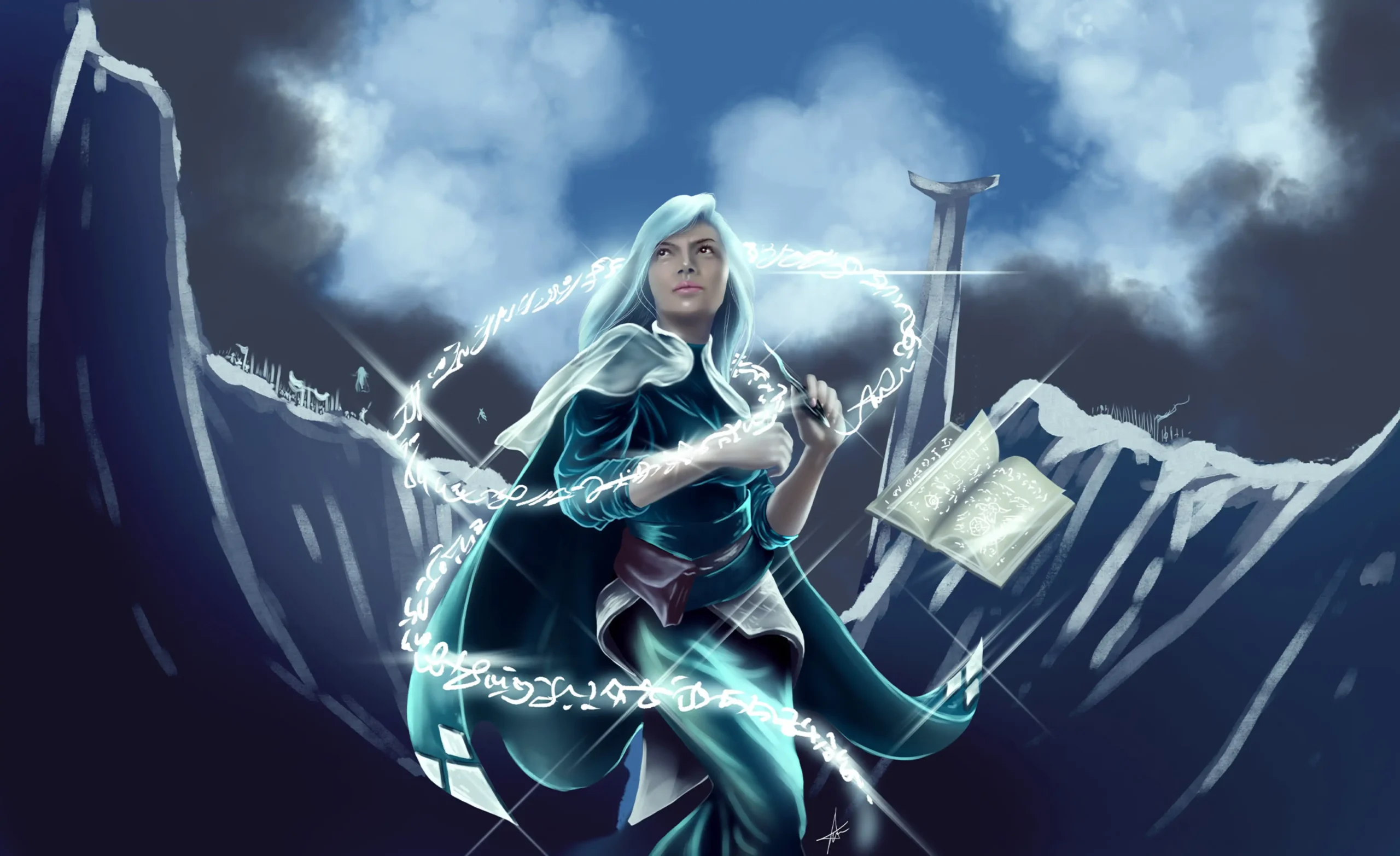
My thumb hovered over the glass of my phone screen this morning, hesitating for a fraction of a second before scrolling past yet another glossy, hyper-detailed image of a cyberpunk city. It was beautiful in a technical sense. The lighting was dramatic, the reflections on the wet pavement were mathematically correct, and the composition followed every rule in the book. But it felt cold. It felt like eating a plastic apple that looks more delicious than the real thing but tastes like absolutely nothing. That image was generated by an algorithm in seconds, a feat that would have taken me weeks to render by hand just a few years ago.
We are living through a strange, rapid shift where the definition of creativity is being rewritten in real-time. The speed at which artificial intelligence has infiltrated our visual culture is honestly a bit terrifying. It happened so fast that we barely had time to blink. One day we were laughing at generated images of people with seven fingers, and the next day we were struggling to tell if a photograph was real or a hallucination of a neural network. This explosion of synthetic media has flooded the internet, creating a noise floor so high that actual human work risks getting drowned out.
But something interesting is happening amidst this flood. As AI content becomes ubiquitous, cheap, and instantaneous, human-made content is quietly transforming into a luxury good. It is becoming the rare item in a market saturated with mass production. There is a specific value returning to things that are clearly, undeniably made by a person. We are starting to crave the evidence of effort. When everything can be perfect, perfection becomes boring. The flaws are where the value lives now.
I have always believed that the little imperfections are what make art breathe. Think about a live acoustic performance versus a perfectly quantized electronic track. The electronic track hits every beat with mathematical precision, but the acoustic performance has a push and pull. The tempo might drift slightly. The guitarist’s finger might squeak against the string during a chord change. Those aren’t mistakes. They are proof of life. They tell you that a human being is on the other end of the audio, making decisions, feeling the rhythm, and reacting in the moment.
Visual art is no different. When I draw a line on my tablet, there is a micro-tremor in my hand. It comes from my pulse, my coffee intake, my years of muscle memory fighting against the friction of the stylus. That line carries the weight of my experience. An AI does not have a pulse. It does not have muscle memory. It creates a line because a dataset told it that a line usually goes there. The result might be smoother, cleaner, and faster, but it lacks the narrative of its creation.
This is not to say that I hate technology. I am a geek at heart. I love coding, I love synthesized sounds, and I love the tools that make my workflow easier. Artificial intelligence is a fascinating piece of engineering. It is a powerful tool, and pretending it does not exist would be foolish. It is here, and it is being forced into our software, our operating systems, and our daily workflows whether we asked for it or not. The problem arises when we stop treating it as a tool and start accepting it as the artist.
Using AI to brainstorm ideas, generate mood boards, or automate tedious file management tasks is brilliant. It frees up brain power for the actual creative work. But when the prompt becomes the final product, we lose something vital. We lose the struggle. The struggle is important. The frustration of trying to get a shadow right, or rewriting a line of code three times because the logic isn’t clicking, is the process that refines the final output. That friction generates heat, and that heat is the soul of the work. If you skip the struggle, you skip the part where your personality gets stamped onto the project.
We have had to draw a hard line in the sand regarding this. We use computers, we use modern software, but the final output must be human. The brushstrokes need to be ours. The code needs to be written with intent. We value the “hand-crafted” label not just as a marketing term, but as a philosophy of existence in a digital age. It is about respecting the craft. It is about looking at a piece of UI design and knowing that a person sat there and thought about how the user would feel clicking that button, rather than an algorithm predicting the most likely placement based on a billion other websites.
There is a distinct texture to human decision-making that algorithms haven’t quite cracked yet. You see it in web design often. AI can generate a layout that looks standard and professional. It follows the grid. It uses complementary colors. But it often lacks wit. It misses the subtle joke in the micro-copy or the unexpected interaction animation that makes a user smile. Those moments of delight come from empathy, from one human understanding what another human finds pleasant or funny. AI doesn’t have empathy; it only has patterns.
I think about this a lot when I am working on music or digital art. The temptation to take shortcuts is always there. Why spend three hours painting a background when I could generate one in thirty seconds? The answer is because the painting is the point. The act of making it is where I learn. If I outsource the making to a machine, I stop learning. I stop growing as an artist. And eventually, if I do that enough, I won’t be an artist anymore. I will just be a prompt engineer, a manager of robots. That sounds incredibly dull to me.
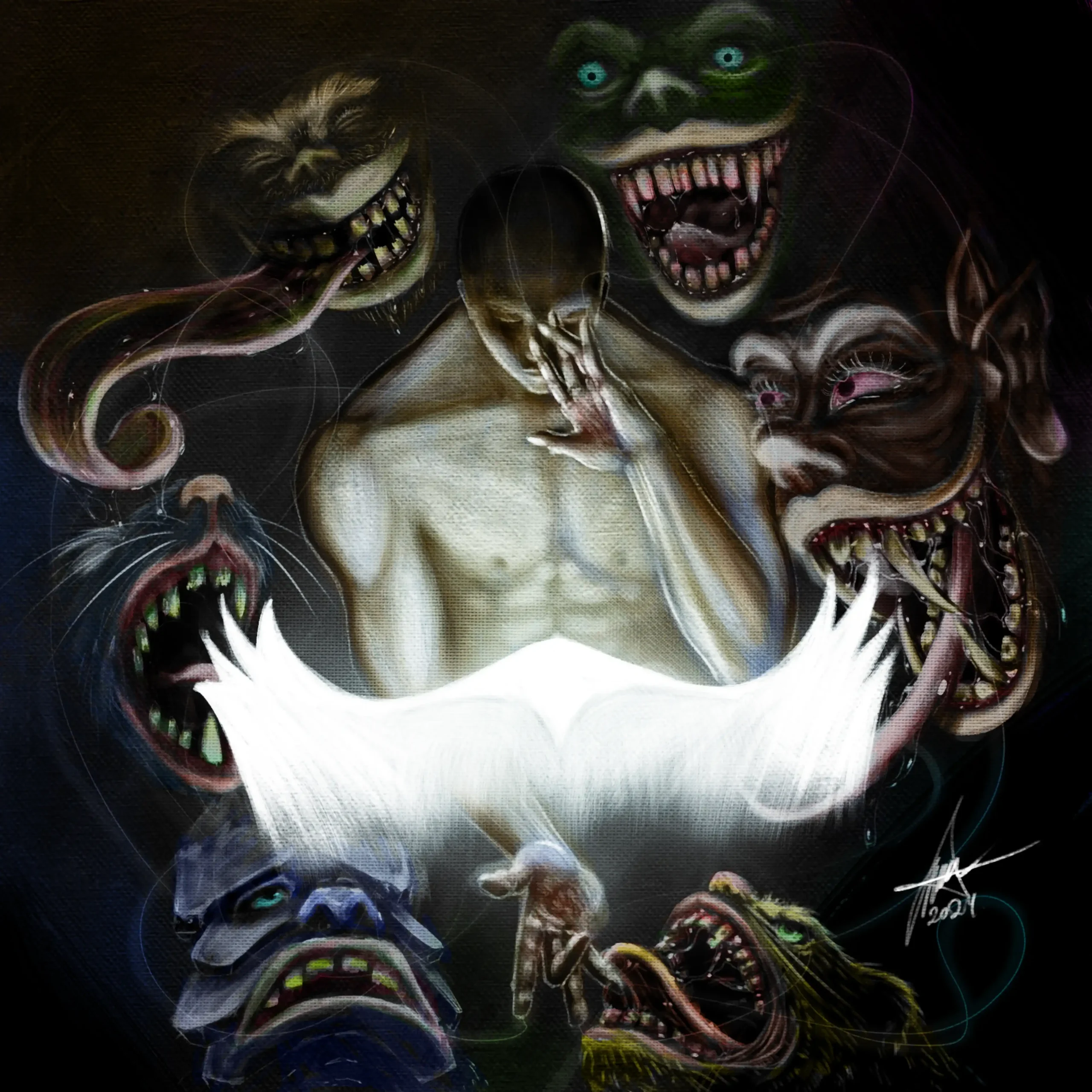
The scarcity of human-generated content is going to drive its value up. We are already seeing a backlash against the “AI look.” People are getting tired of that specific, overly polished, slightly soulless aesthetic that Midjourney and DALL-E tend to produce. It is the visual equivalent of elevator music. It fills the space, but you don’t really listen to it. In contrast, seeing a sketch with pencil marks, or a digital painting where you can see the rough edges of the brush, feels refreshing. It feels like a conversation.
This connects deeply to how we approach UI and UX design. A website or an app is a digital environment. It is a space where people go to do things. If that space feels sterile and generated, users feel less connected to the brand or the service. But if the iconography is hand-drawn, if the layout breaks the grid in a clever way, if the copy has a specific voice, the user feels welcomed. They feel like they are visiting a place built by people, for people. That connection builds trust, and trust is the most valuable currency on the internet right now.
We are entering an era where “verified human” might become a necessary tag for creative works. It sounds dystopian, but it might actually be a positive turn. It forces us to define what makes us special. It forces us to lean into our humanity. We can’t out-speed the machines. We can’t out-render them. They will always produce more volume than we can. So the only way to compete is to be more human. To be weirder. To be more specific. To make choices that an algorithm would consider “statistically unlikely” but which resonate on an emotional level.
I remember watching a documentary about a master sushi chef who spent decades perfecting how he cooks rice. An industrial machine can cook rice perfectly every single time. It can measure the water and heat with zero margin for error. But people still line up and pay a premium to eat the rice cooked by the master. Why? Because his rice carries his dedication. It carries a story. When you eat it, you aren’t just consuming carbohydrates; you are participating in a culture of excellence. That is what we need to aim for in the digital arts. We need to be the master chefs of pixels and code.
The push for AI is aggressive right now because there is a lot of money involved. Tech giants want us to believe that typing a prompt is the same as painting a canvas. They want to democratize creativity, which sounds noble, but often just means devaluing the skill required to create. If everyone is an artist, then no one is. But I don’t think they will succeed in replacing us. They will just clear out the middle ground. The mediocre, generic work will be taken over by AI. That is inevitable. But the high-end, thoughtful, personal work will remain untouchable. In fact, it will stand out more than ever.
I find comfort in the physical world when the digital one gets too loud. I pick up my guitar. I write in a paper notebook. I cook dinner. These things ground me. They remind me that the process is the reward. The smell of onions frying is real. The callous on my finger from the guitar string is real. These sensations feed back into my digital work. They remind me that I am designing for living, breathing creatures, not for search engine bots.
So, if you are a creator worrying about being replaced, stop trying to be a machine. Stop trying to be perfect. Embrace your weirdness. Lean into the things that make your style unique, even if they are technically “wrong.” Make art that has rough edges. Write code that has personality. Design interfaces that feel like a handshake, not a form. The future belongs to the humans who refuse to automate their hearts.
We have a responsibility to keep the internet human. It is a shared space, and we are the architects. If we let the bots build everything, we will end up living in a cage of our own making. But if we keep building with our hands, with our messy, chaotic, wonderful human minds, we can build a digital world that actually feels like home. It is hard work. It takes time. It is expensive. But it is the only way to make something that lasts.
The gloss of AI will eventually fade. Novelty always does. Once the initial shock of “wow, a computer made this” wears off, we will be left looking for the meaning behind the image. And we will realize that an image without an author has no meaning. It is just data arranged in a grid. The art that stays with you, the design that changes how you think, the music that makes you cry, that will always come from a person. It comes from someone who lived a life, felt a feeling, and found a way to transmit that feeling to you through a medium. No algorithm can replicate that transmission. It can mimic the signal, but it cannot generate the source.
That is why I am optimistic. The more artificial the world becomes, the more we will hunger for the real. We are seeing it already. The revival of vinyl records, the popularity of film photography, the explosion of craft markets. People want to feel the hand of the maker. In the digital space, this translates to bespoke web design, custom illustrations, and thoughtful, non-generic writing. It translates to quality over quantity.
We are betting our livelihood on this belief. We are betting that you, the audience, can tell the difference. We believe that you can feel the warmth in a hand-crafted illustration versus the cold precision of a generated one. We believe that you value the time we spend refining a user flow to make it intuitive, rather than just functional. We believe that human connection is not a legacy feature that can be patched out in the next update. It is the core operating system of our species.
So let the machines churn out their millions of images. Let them fill the servers with infinite variations of the same prompt. We will be over here, at our desks, with our stylus pens and our code editors, making one thing at a time. We will be making things that have a pulse. We will be making things that might have a few wobbly lines or a slightly odd color palette, but which possess a soul. And in a world of infinite automated content, that soul is going to shine brighter than any perfect, glossy render ever could.
The noise is loud, but the signal is clear. Human creativity is not obsolete. It is just becoming exclusive. It is becoming the mark of quality. And that is a badge I am proud to wear. We keep creating, we keep learning, and we keep putting our messy, imperfect selves into everything we make. That is the only way forward that makes any sense to me.